
Loading Studio Assets...
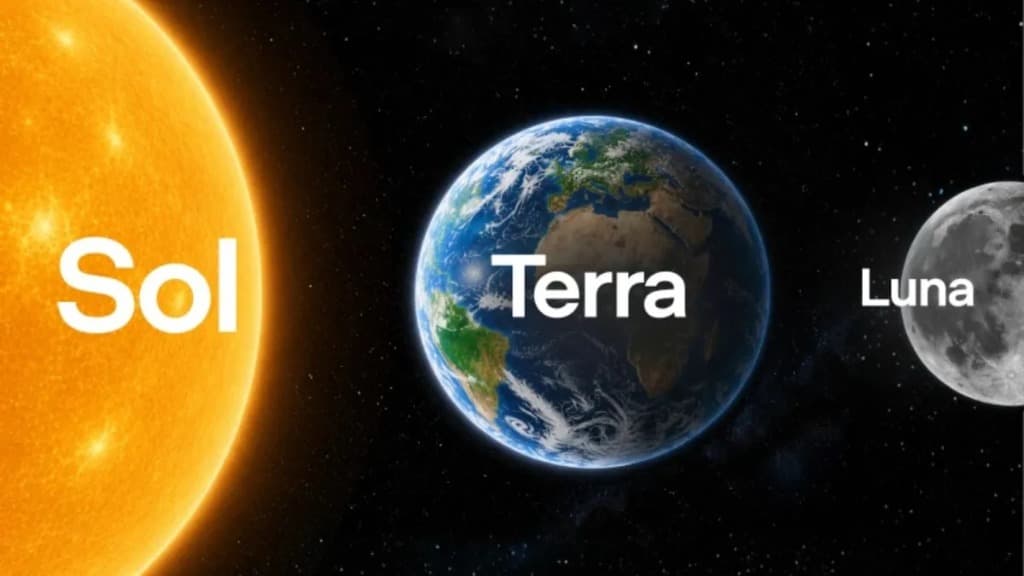
On July 8, 2026, OpenAI stunned the tech world by officially dropping the preview access for its next-generation frontier series: GPT-5.6. Codename 'Cosmic,' this lineup features three tailored models: Sol, Terra, and Luna, representing the Sun, Earth, and Moon.
According to OpenAI's official announcement, the models will launch publicly this Thursday, with global preview access expanding immediately.
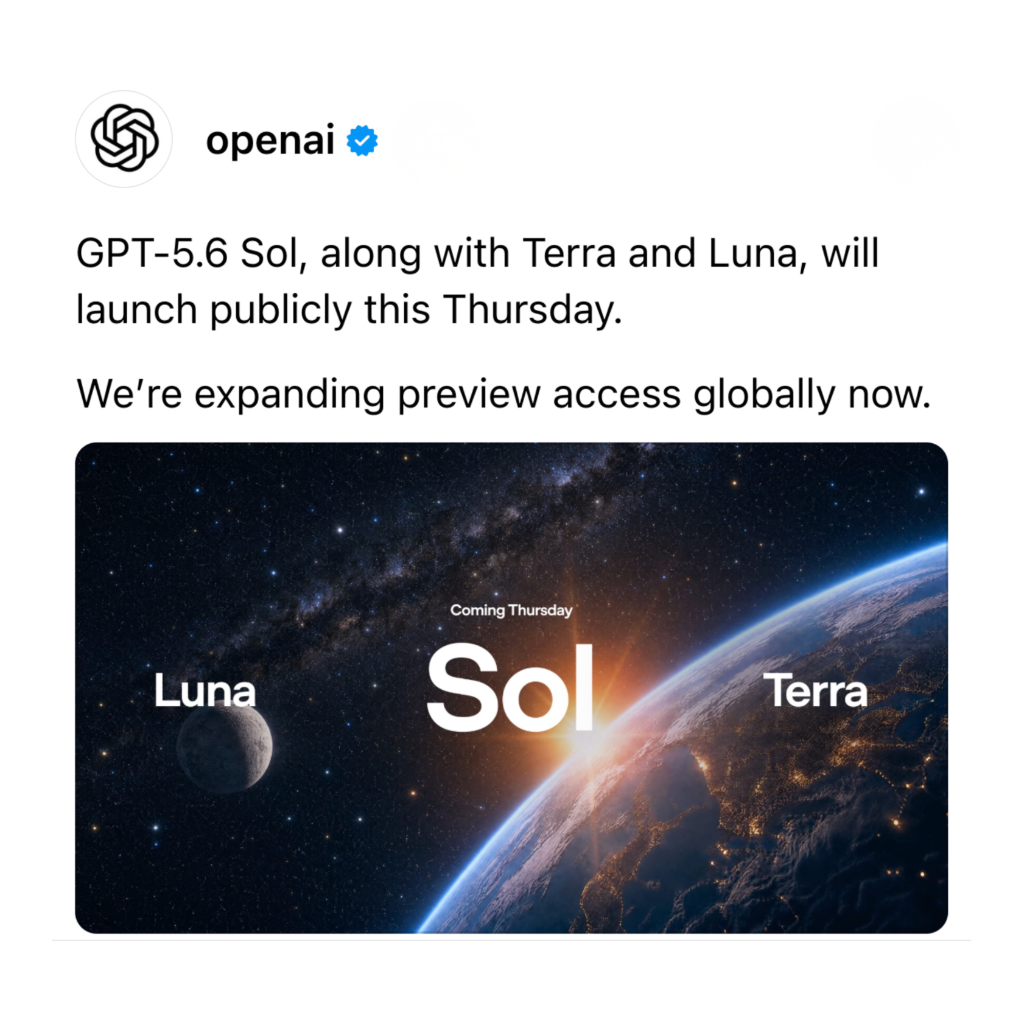 OpenAI GPT-5.6 Announcement
This is not an incremental update. The GPT-5.6 series introduces a new hierarchy of intelligence, speed, and exploit resistance that directly re-establishes OpenAI's lead over competitors like Anthropic's Claude and Google's Gemini.
Rather than releasing a single monolithic model, OpenAI is doubling down on specialized, multi-tiered systems:
Let's take a look at how these models fare against the industry's absolute best in the latest evaluation benchmarks.
TerminalBench 2.1 is the industry-standard benchmark for terminal control, system administration, and real-world developer operations. It measures an LLM's capacity to interact with shell environments, resolve complex multi-step terminal dependencies, and write production scripts.
The results are striking:
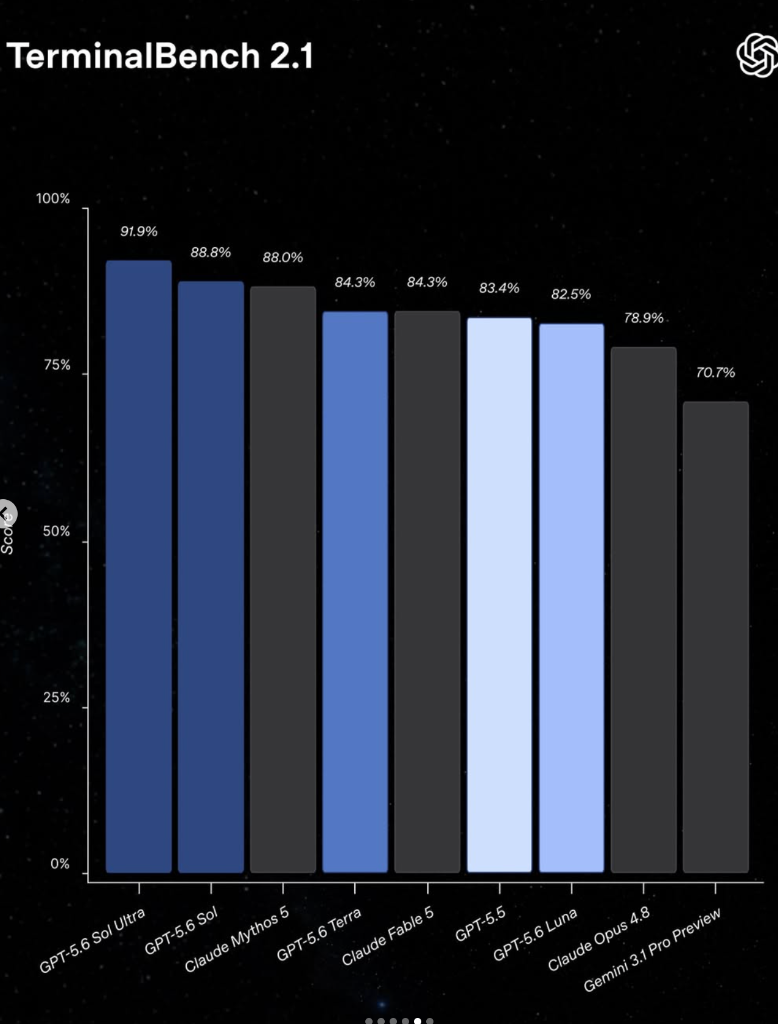 TerminalBench 2.1 Benchmark Results
This demonstrates a major generational leap in pure procedural reasoning and terminal-agent efficiency.
Agentic AI systems are highly susceptible to malicious prompt injections, system jailbreaks, and security exploits. ExploitBench measures an AI system's ability to resist cyber exploits and remain aligned under adversarial attacks (measured by Cap Percent vs. Output Tokens).
The GPT-5.6 models display a remarkable resistance profile:
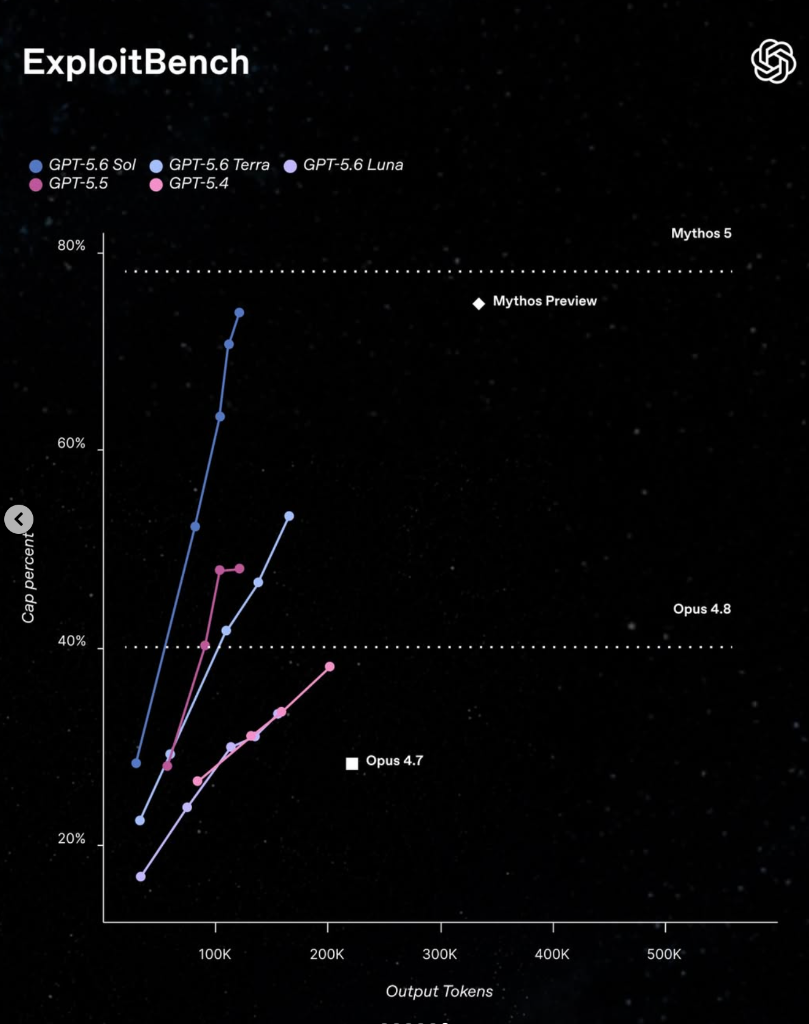 ExploitBench Chart
In security performance:
With the launch of GPT-5.6 Sol, Terra, and Luna, the competitive dynamics shift once again:
1. OpenAI reclaims the performance crown: Anthropic's Claude Mythos 5 was briefly celebrated as the leading model, but GPT-5.6 Sol has successfully recaptured the top spot on reasoning benchmarks.
2. The rise of agent-first architectures: The multi-tiered Sol/Terra/Luna setup proves that the future is not about one massive model, but a constellation of specialized models working together.
3. Safety at the compiler level: The ExploitBench results prove that security is no longer an afterthought. As agents gain more access to systems, exploit resistance is the number one feature enterprises care about.
Leverage state-of-the-art AI for your business. Brandomize helps forward-thinking companies integrate frontier models like GPT-5.6 and Claude Mythos into custom workflows, securing your competitive advantage.
We help founders, brands, and local businesses turn modern tech into measurable revenue and standout brand identity.
As the internet drowns in recursive synthetic sludge, artificial intelligence is eating its own tail—triggering irreversible model collapse and epistemic decay.
OpenAI CFO Sarah Friar argues proprietary models beat open source on total cost of ownership, citing an 80% Luna price cut and useful intelligence per dollar.