
Loading Studio Assets...
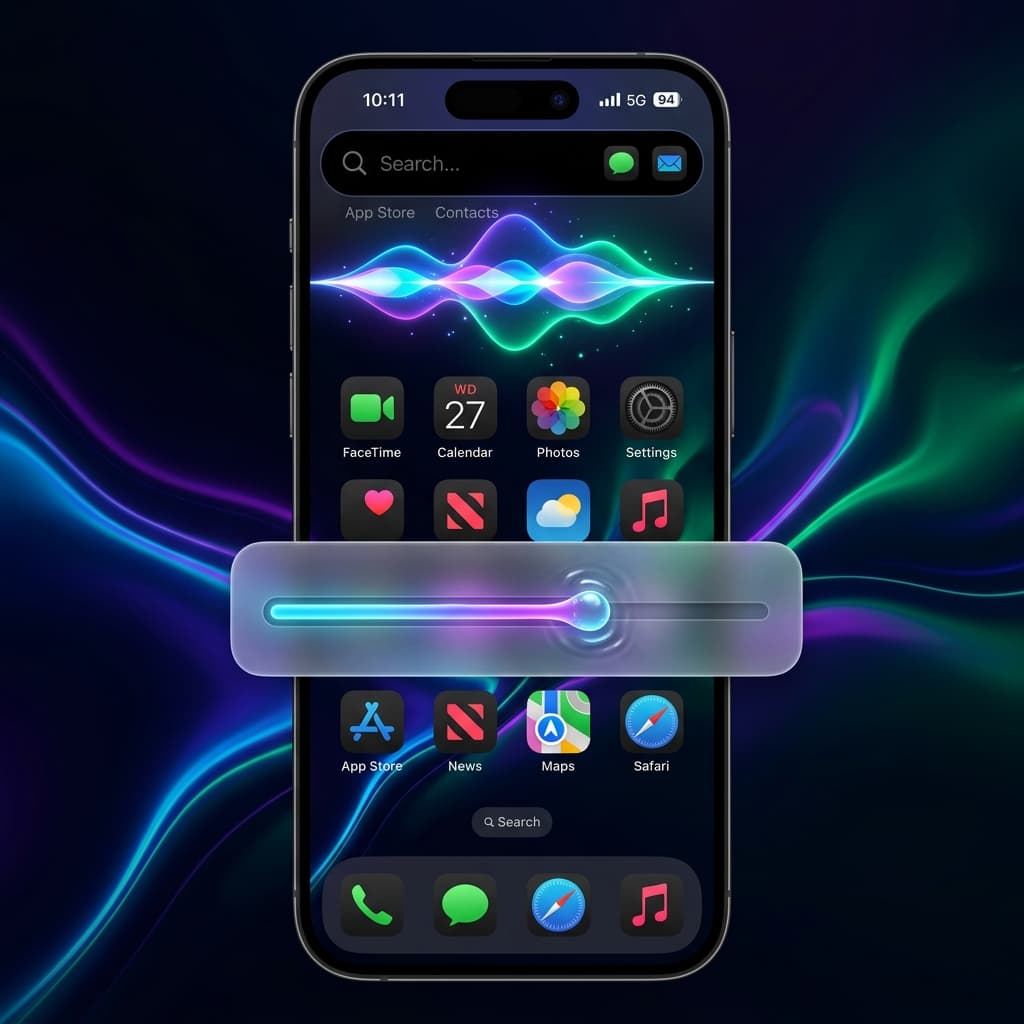
Apple has quietly previewed its upcoming operating system update, iOS 27, and the design community is buzzing.
The update introduces two major front-facing user interface overhauls: the Liquid Glass adjustment slider and a completely reimagined Siri UI that is physically integrated with the Dynamic Island.
Here is a sneak peek at the design philosophy, interaction mechanics, and technology driving Apple's next interface paradigm.
For years, adjustment controls in mobile operating systems have been flat, minimal, and predictable. iOS 27 breaks this paradigm by introducing Liquid Glass—a rendering system that treats screen UI components as three-dimensional fluid physical objects.
The new slider behaves like a pocket of mercury or viscous liquid suspended under glass:
This level of physical UI immersion is the most significant step forward in tactile screen design since the early days of skeuomorphism.
Siri is undergoing a major functional and visual transformation. Instead of a floating glowing orb at the bottom of the screen, the new Siri is now mechanically anchored to the Dynamic Island.
When activated:
By anchoring the assistant to the physical punch-hole of the screen, Apple has successfully turned a hardware limitation into the epicenter of device intelligence.
The introduction of Liquid Glass and the new Siri placement signals a broader direction for mobile software:
1. SKEUOMORPHISM IS BACK (But Modernized): We are moving past flat design. Interfaces are becoming tactile, three-dimensional, and physics-driven to create more engaging micro-interactions. 2. GPU-DRIVEN LAYOUTS: Rendering real-time fluid deformation and glass refraction requires high-performance shaders. Designers must think in terms of dynamic rendering loops, not static pixels. 3. AGENTIC HUDs: The Dynamic Island integration shows that personal AI assistants need a dedicated, permanent place on the screen. The assistant is no longer an app you open—it is the screen itself.
Design the future of your product. At Brandomize, we specialize in cutting-edge frontend interfaces, custom mobile systems, and highly interactive user experiences that wow audiences. Connect with us to build your next-generation digital product.
We help founders, brands, and local businesses turn modern tech into measurable revenue and standout brand identity.
Which website maker is best for your business in 2026? We compare custom Next.js/React development with popular AI builders across speed, SEO control, cost, and scalability.
Google just overhauled Stitch with an AI-native canvas, voice input, instant prototyping, and DESIGN.md. It is free, it is powerful, and it is changing how websites and apps get designed.