
Loading Studio Assets...
There is an ancient, unsettling myth etched into alchemical manuscripts across centuries: the Ouroboros—a serpent condemned to consume its own tail in an infinite, suffocating loop.
For the first three years of the generative artificial intelligence boom, Silicon Valley promised us a radically different mythology. We were told we were building an omniscient digital oracle. An intellectual superpower capable of absorbing the totality of human knowledge and synthesizing it into effortless brilliance.
Instead, we built a firehose.
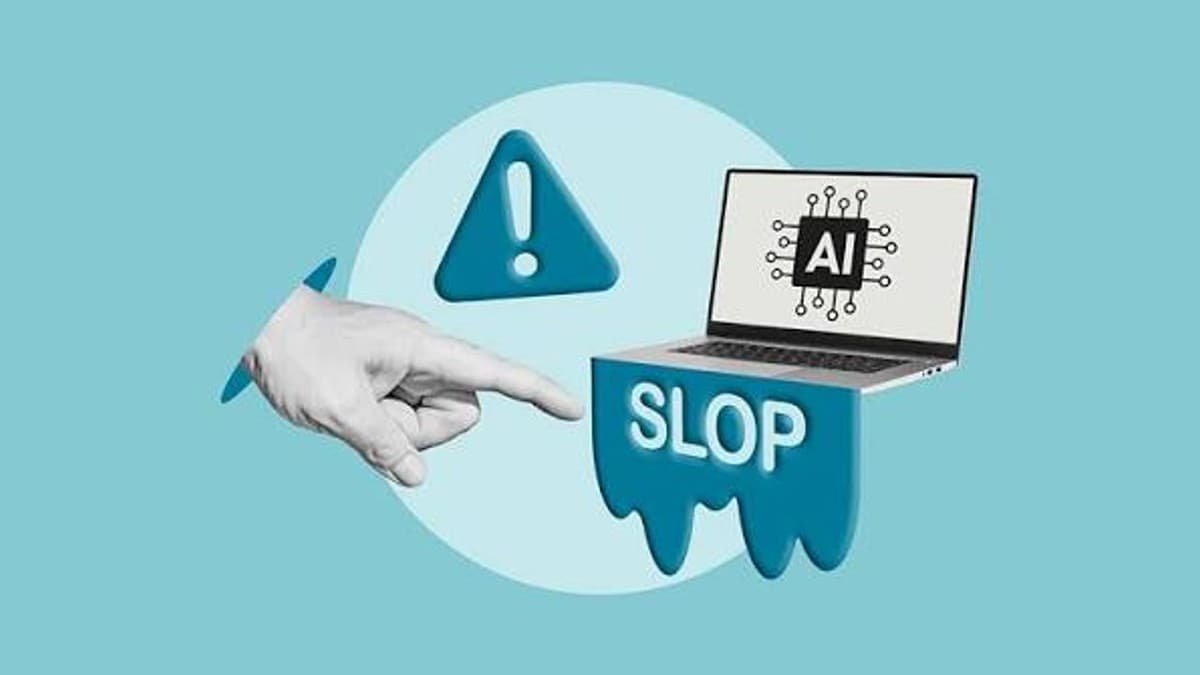
Between late 2022 and 2026, the global internet was submerged under an unrelenting tsunami of machine-fabricated filler. Automated affiliate blogs, synthetic SEO farm pages, bot-authored LinkedIn parables, hallucinated academic papers, and algorithmic social accounts regurgitating each other's talking points. In internet parlance, it earned a visceral, unglamorous name: AI Slop.
Now, a quiet panic is unfolding inside the world's premier machine learning laboratories.
The grand automated apparatus is choking on its own exhaust. Because the open internet has been flooded with synthetic content, future artificial intelligence models are inevitably being trained on the debris left behind by earlier models.
The machine is eating its own tail. And scientifically speaking, it is beginning to rot from the inside out.
In late 2024, an international team of researchers from Oxford, Cambridge, Toronto, and Edinburgh published a landmark study in the journal Nature titled "AI models collapse when trained on recursively generated data", led by Ilia Shumailov and Yarin Gal.
Their thesis dismantled the tech industry's favorite assumption that you can simply feed synthetic data back into AI models to make them infinitely smarter.
The researchers proved mathematically that when generative models are trained indiscriminately on content produced by previous AI generations, they suffer from an irreversible degenerative disease known as Model Collapse.
mermaidflowchart TD A[Human Web Era: Rich, Messy, Idiosyncratic Human Thought] -->|Pre-2022 Scraping| B[Gen-1 Frontier Models: GPT-4, Claude, Gemini] B -->|Mass Output| C[The Slop Tsunami: Billions of Synthetic Articles, Reviews & Code] C -->|Crawlers Ingest Slop| D[Gen-2 Training: Tail Distribution Vanishes] D -->|Diminished Nuance| E[Gen-3 Training: Compounded Hallucinations & Cliché Saturation] E -->|Mathematical Decay| F[Late-Stage Model Collapse: Complete Statistical Nonsense] F -.->|The Ouroboros Trap| C
To understand why this happens, you don't need a PhD in linear algebra. You only need to remember an old office photocopier.
If you take a crisp, original photograph—full of subtle shadows, fine textures, and imperfect human blemishes—and make a photocopy, it looks acceptable. But if you take that photocopy and photocopy it, and then photocopy that third copy across ten iterations, something catastrophic occurs:
When a Large Language Model writes, it does not possess consciousness; it calculates statistical probability. It samples from the fat middle of the bell curve—the most expected, consensus-heavy phrasing.
Human genius and culture, however, do not live in the middle of the bell curve. They live on the tails of the distribution. The eccentric turns of phrase, the regional idioms, the sudden leaps of poetic insight, the raw vulnerability born of real human grief, comedy, and lived experience.
When an AI trains on human writing, it captures those eccentric tails. But when an AI trains on AI slop, those long tails are statistically pruned away.
With every recursive cycle, the model's universe shrinks. By Generation 5, the model forgets that human beings use weird analogies or hold paradoxical beliefs. By Generation 8, it begins hallucinating medieval Latin gibberish and repeating meaningless boilerplate. The model collapses because it has consumed an echo of an echo until all signal is replaced by noise.
For years, venture capitalists sneered at traditional publishing. The mantra was clear: "Information wants to be free, and web scrapers will take whatever they want."
Then Model Collapse hit the lab benchmarks.
Suddenly, frontier AI labs realized that the open web—the very commons they had scraped with impunity—had become an environmental hazard. Scraping Common Crawl in 2026 is no longer like dipping a bucket into a fresh mountain stream; it is like dipping a bucket into a radioactive drainage ditch downstream from an automated content refinery.
"The true scarcity of the 21st century is no longer compute power or GPU clusters. The true scarcity is uncontaminated human thought."
This stark realization sparked the frantic scramble for Peak Human Data:
| Pre-2022 Scraping Paradigm | The 2026 Model Collapse Reality |
|---|---|
| Scraping raw public web pages indiscriminately | Filtering out synthetic slop with forensic watermarking |
| Claiming all online text is fair-game training fodder | Paying tens of millions in closed-door licensing deals |
| Believing synthetic data would replace human writers | Admitting that models trained on synthetic data degrade |
| Prioritizing sheer volume of petabytes | Prioritizing verified provenance and human craft |
Notice what happened next: the very companies building generative engines began frantically writing checks to Reddit, Condé Nast, Axel Springer, News Corp, and Wikipedia.
Why? Because those platforms still possessed archives of messy, argumentative, authentic text written by flesh-and-blood human beings before the floodgates opened.
The greatest irony of the artificial intelligence revolution is that the multi-trillion-dollar frontier depends entirely on preserving the very human craftsmanship that tech evangelists claimed was obsolete.
In her rigorous treatise AI Slop III: Society and Model Collapse for the Khazanah Research Institute, researcher Jun-E Tan pointed out that focusing solely on technological failure misses the deeper injury inflicted on human civilization.
The real danger of AI slop is not that people will be tricked by a single fake image or an inaccurate paragraph.
The real danger is Epistemic Exhaustion.
When every Google search serves eight paragraphs of mechanically padded filler, when scientific paper submissions skyrocket by 500% while actual breakthrough insights stagnate (the "Production-Progress Paradox" noted by Princeton scholars Sayash Kapoor and Arvind Narayanan), and when social platforms become bot farms applauding other bot farms, human beings don't just get misinformed.
They simply stop believing that anything is real.
When truth feels indistinguishable from algorithmic sludge, society defaults into cynicism. People retreat from public discourse, abandon objective inquiry, and burrow into tribal identity bubbles. If you cannot trust that an article, an image, or a research report came from a human mind operating with integrity, then reality itself fractures into a funhouse mirror.
Science cannot operate in a funhouse mirror. Democracy cannot govern in a funhouse mirror.
If you are a writer, a designer, a software engineer, or an independent business owner feeling existential dread about generative automation, look closely at what Model Collapse proves:
The machine cannot survive without you.
The moment artificial intelligence attempts to run on its own recursive output, it degenerates into dementia. It requires human friction, human idiosyncrasy, human lived experience, and human judgment to anchor it to reality.
We are already witnessing the beginnings of a cultural and economic counter-revolution:
The internet does not need another billion automated blog posts written by a prompt engineer who didn't care, aimed at a reader who doesn't exist, to generate advertising pennies that no longer convert.
The Ouroboros will eventually finish eating what it can of its tail. When the synthetic dust settles, the only things that will endure are the things built with human care, intellectual courage, and irreplaceable taste.
We help founders, brands, and local businesses turn modern tech into measurable revenue and standout brand identity.
OpenAI CFO Sarah Friar argues proprietary models beat open source on total cost of ownership, citing an 80% Luna price cut and useful intelligence per dollar.
OpenAI schedules an exclusive September 16 gathering in San Francisco to demo GPT-6 Astra's autonomous computer use and enterprise cybersecurity capabilities.