
Loading Studio Assets...
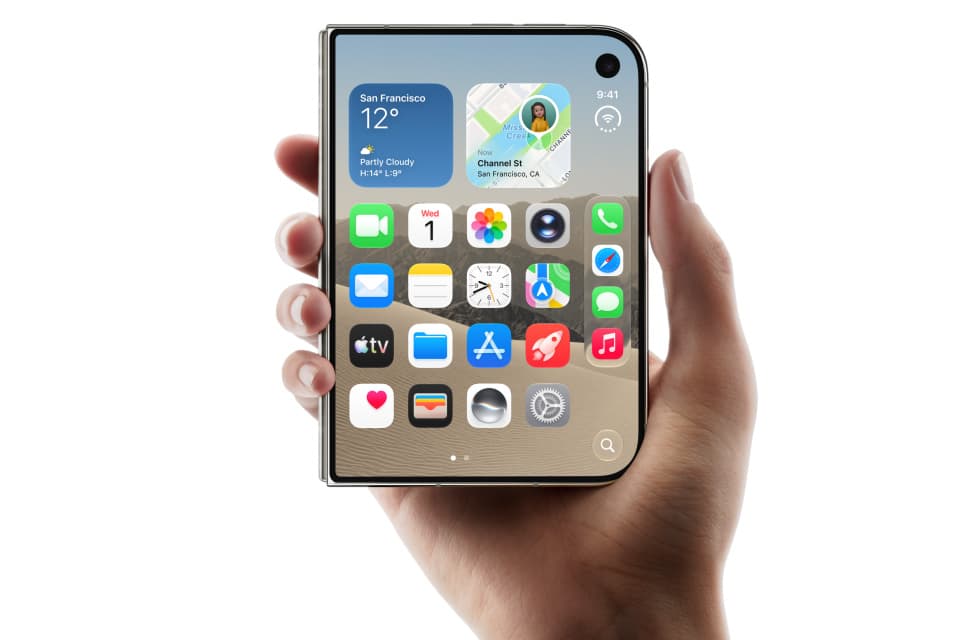
Apple has finally entered the foldable-phone market with the iPhone Duo, a book-style foldable designed to turn from a conventional smartphone into a much larger 7.6-inch device.
Rather than simply making a flexible screen and putting a hinge in the middle, Apple has redesigned the display stack, chassis, hinge, battery architecture, thermal system and iOS experience around the folding form factor.
Updated: 10 September 2026
Product: Apple iPhone Duo
Category: Foldable smartphone
Starting price in India: ₹2,99,900
India pre-orders: 16 October 2026, 5:30 PM IST
India availability: 23 October 2026
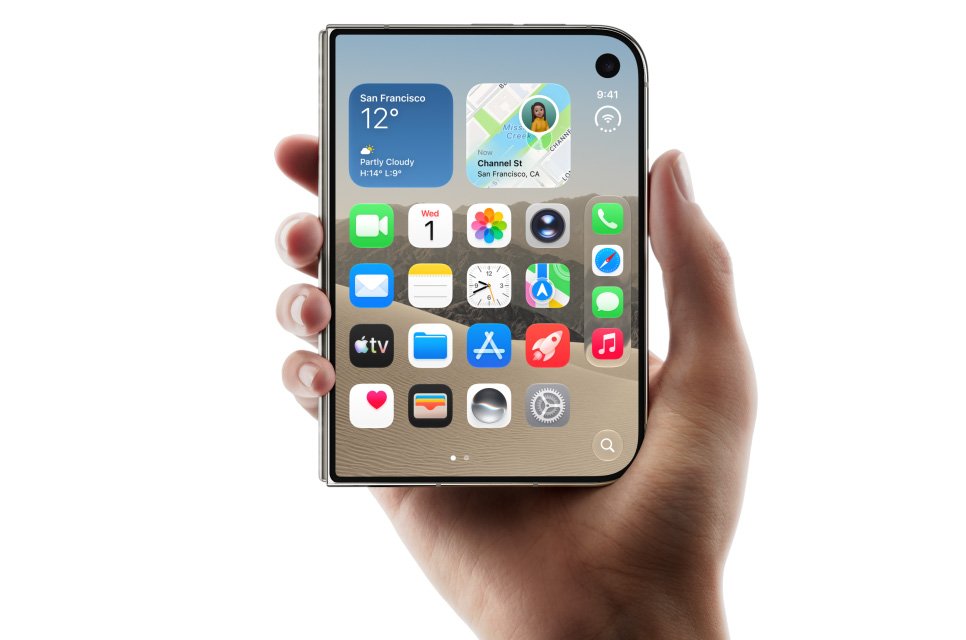 Apple iPhone Duo closed book-style foldable form factor
Apple's official Indian store lists the following launch prices:
| Storage | India Price |
|---|---|
| 256GB | ₹2,99,900 |
| 512GB | ₹3,24,900 |
| 1TB | ₹3,74,900 |
| 2TB | ₹4,49,900 |
Both Star White and Night Sky are available across all storage configurations.
The starting price makes the Duo one of the most expensive mainstream smartphones sold by Apple in India. The 2TB version crosses the ₹4.49 lakh mark, reflecting its positioning as a portable dual-screen workstation.
The iPhone Duo uses a book-style inward-folding design.
When closed, it has a compact 5.4-inch outer display. When opened, the device reveals an expansive 7.6-inch folding display.
Apple says both displays use a consistent aspect ratio, allowing content to transition between them without a dramatic change in proportions.
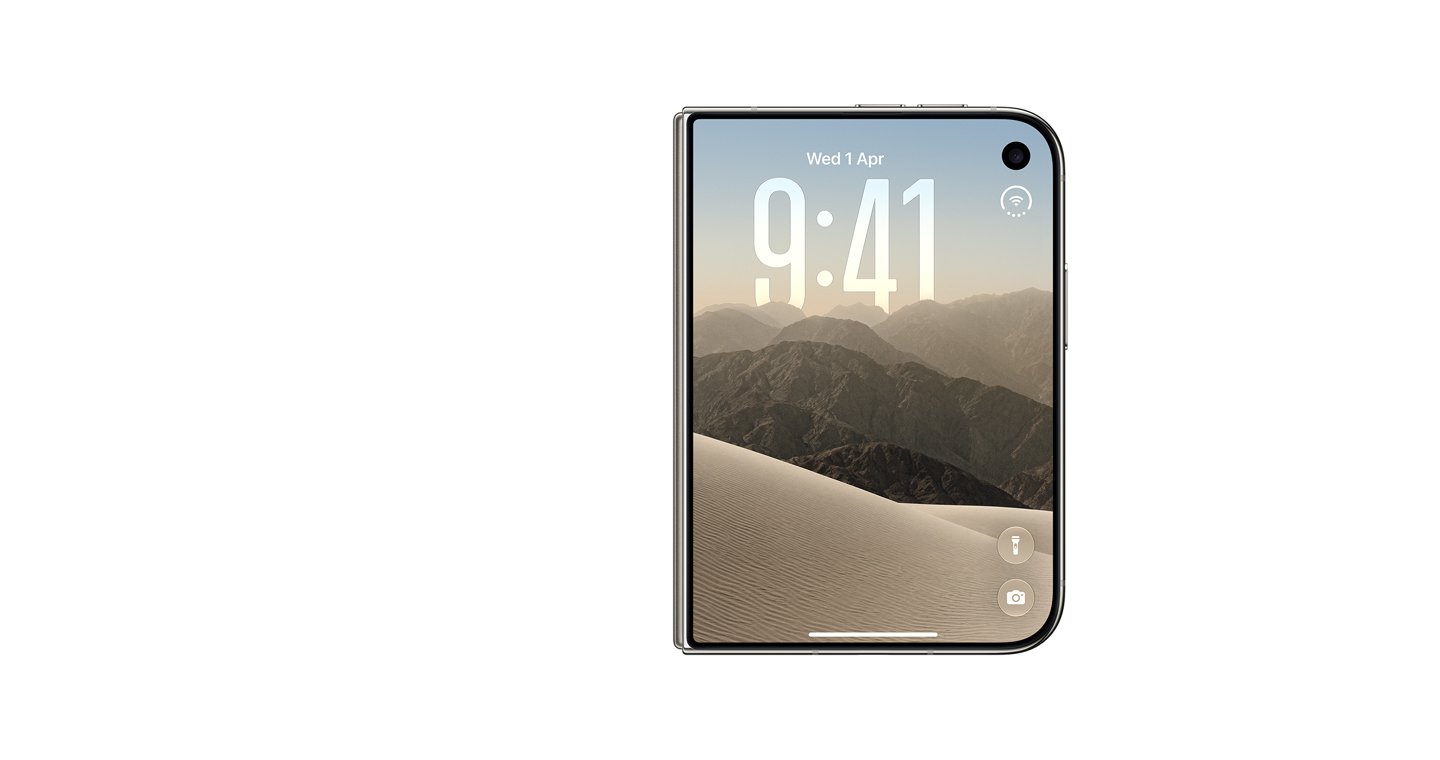 iPhone Duo closed profile and dual display structure
| Measurement | Open | Folded |
|---|---|---|
| Width | 164.6 mm | 84.1 mm |
| Height | 117.8 mm | 117.8 mm |
| Thickness | 5.2 mm | 11.3 mm |
| Weight | 254 g | 254 g |
The open thickness of 5.2 mm is particularly notable because it integrates a large folding display, hinge structure, dual batteries, camera sensors and the A20 Pro platform.
The inner screen is a 7.6-inch Super Retina XDR OLED folding display, paired with a pocket-friendly 5.4-inch outer display.
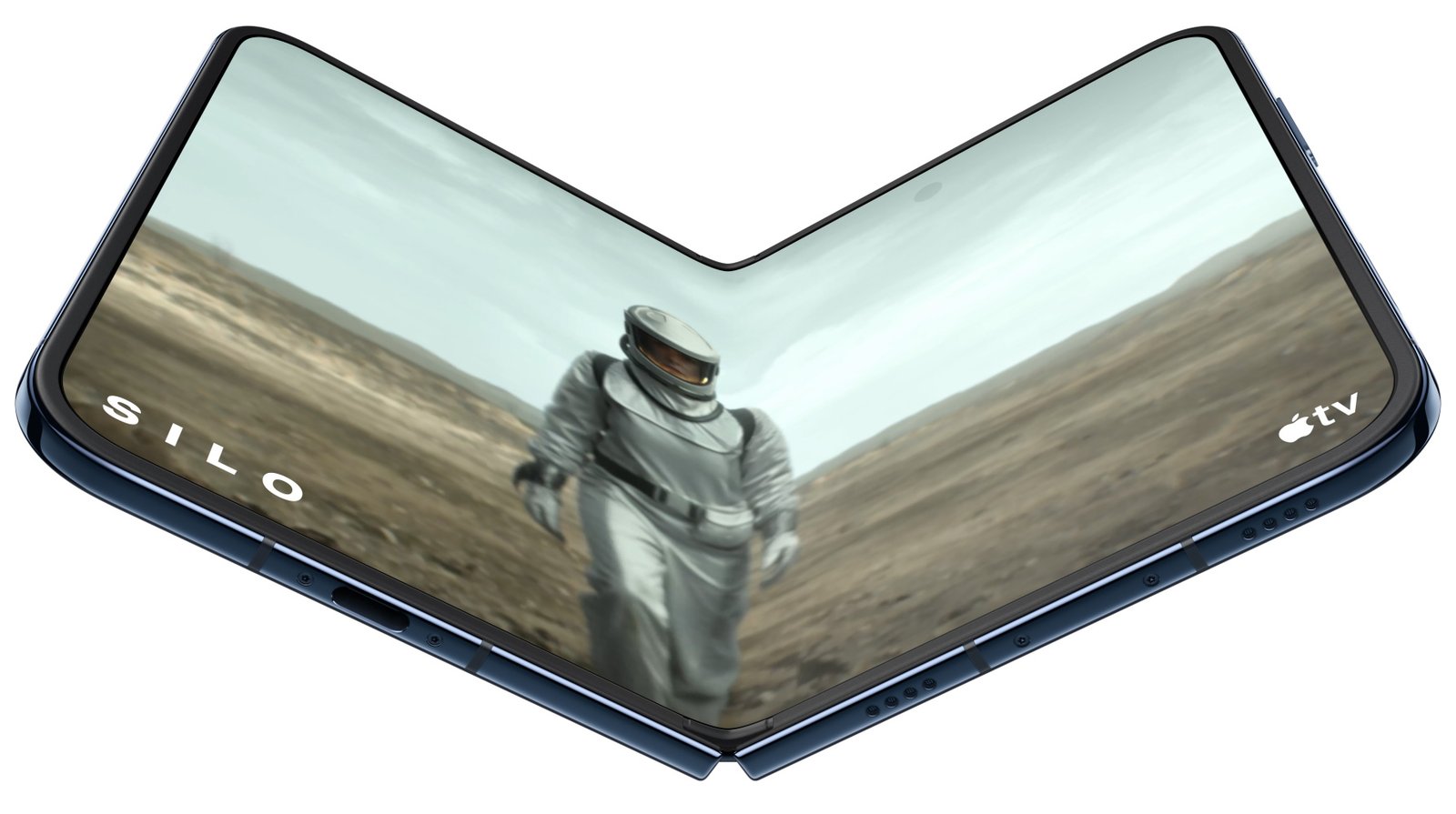 iPhone Duo 7.6-inch inner Super Retina XDR OLED folding display
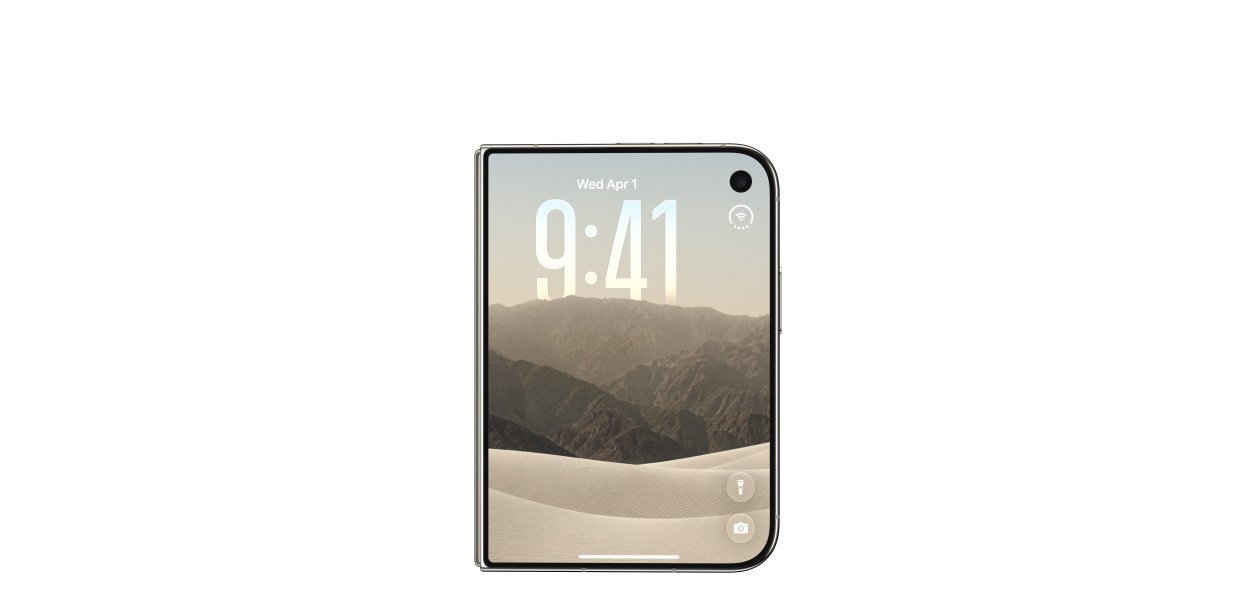 iPhone Duo 5.4-inch outer Super Retina XDR OLED cover screen
The breakthrough is not merely that the OLED bends.
Apple engineered the inner display from 10 ultra-thin layers. These layers work cohesively while the device repeatedly opens and closes:
The custom nano-texture surface reduces glare and helps maintain a smoother visual appearance.
The design also introduces an under-display FaceTime camera, allowing the main inner display to remain visually uninterrupted.
textOuter protective surface ↓ Nano-texture layer ↓ Protective / structural layers ↓ OLED display layers ↓ Optical adhesive layers ↓ Reinforcement structure ↓ Titanium support structure
The key engineering principle is that the display stack is not treated as a single rigid sheet. Its layers are engineered specifically around the mechanical kinematics of the fold.
Apple's precision hinge is the mechanical foundation of the iPhone Duo.
 iPhone Duo precision 3D-printed titanium hinge mechanism
The hinge performs several critical functions simultaneously:
The hinge cover is crafted from 100% recycled titanium manufactured via high-precision 3D printing.
A foldable phone is a precision mechanical system bonded to an electronic display.
Apple engineered the hinge and display as a single integrated sub-assembly rather than two discrete components.
A simplified view of the physical cross-section:
textINNER DISPLAY ┌──────────────────────────┐ │ OLED STACK │ └────────────┬─────────────┘ │ FOLDING REGION │ PRECISION HINGE ┌────────────┴─────────────┐ │ │ LEFT STRUCTURE RIGHT STRUCTURE │ │ Battery Battery │ │ A20 Pro Camera
The hinge must articulate smoothly while the display above it deforms predictably. This combined mechanical-optical challenge is why foldable engineering requires substantial structural innovation.
Apple engineered the display to look remarkably smooth and flat, but it is important to distinguish between minimizing the visible crease and eliminating physical physics.
The 10-layer display construction, nano-texture anti-reflective surface, and underlying support plates reduce the visual and tactile profile of the fold zone significantly. Apple's documentation highlights a smooth, flat viewing experience rather than a blanket "zero crease" claim.
The iPhone Duo is driven by Apple's next-generation A20 Pro silicon.
 Apple A20 Pro 2nm processor with dual Neural Engine
Foldable phones face intense thermal constraints due to ultra-thin 5.2mm chassis walls, yet must sustain:
Apple pairs the A20 Pro package directly with a custom vapor chamber. The chamber dissipates heat evenly across the titanium frame, allowing the Duo to deliver up to 35% better sustained performance than iPhone 17 Pro.
The Duo implements a split dual-battery architecture.
Distributing cells across both halves of the chassis optimizes weight distribution and makes full use of internal volume on either side of the central hinge.
Apple rates video playback at:
Real-world endurance will depend on screen brightness, 5G cellular usage, gaming, and split-screen multitasking.
The Duo features an advanced 48MP Dual Fusion camera system.
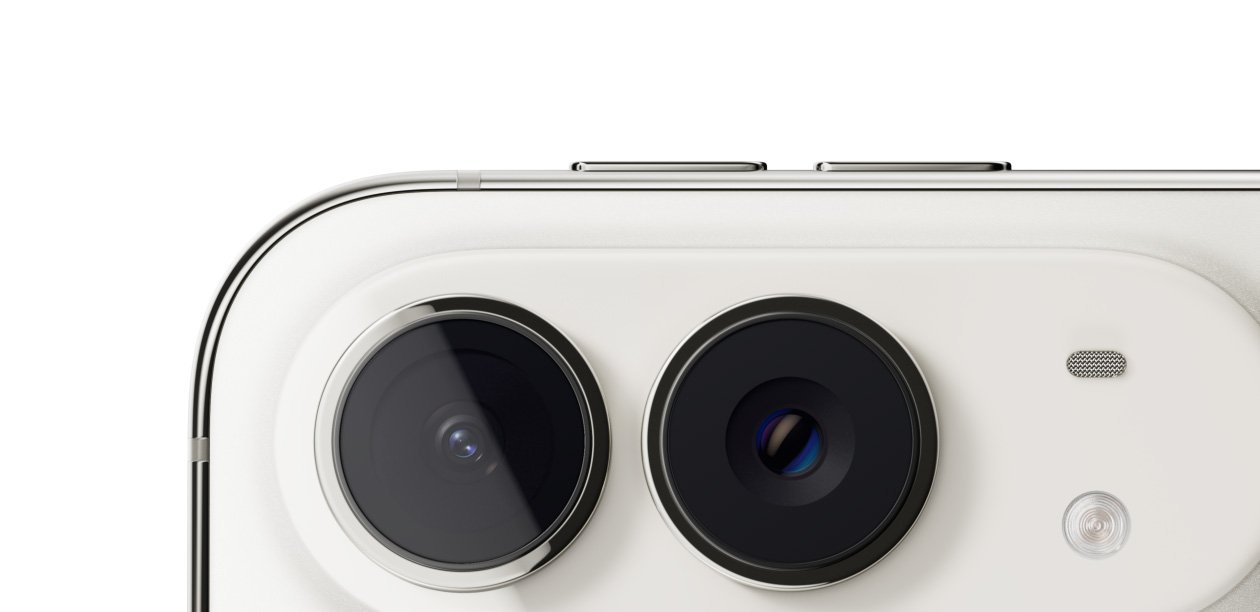 iPhone Duo 48MP Dual Fusion camera system with sensor-shift OIS
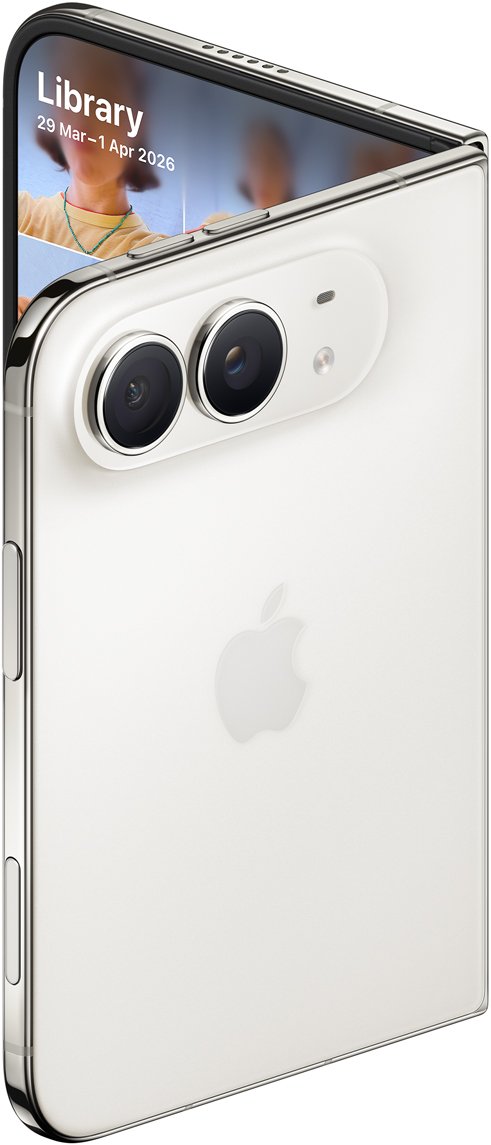 iPhone Duo rear camera and titanium chassis design
Apple built hardware-software synergies around the Duo's folding mechanism:
The 5.4-inch cover display mirrors the viewfinder so subjects can view framing and pose while the primary 48MP cameras take the shot.
The device can partially fold into an L-shape stand on any flat surface, eliminating the need for phone tripods during group photos or time-lapses.
Both outer and under-display cameras can capture synchronized video feeds for vlogging or interview workflows.
The 12MP Center Stage camera automatically pans and reframes subjects during video calls on the large inner canvas.
The iPhone Duo introduces Apple Pencil (USB-C) support on its 7.6-inch inner display.
This expands productivity capabilities for:
Pencil compatibility blurs the line between iPhone and iPad mini, creating a pocketable tablet experience.
Apple placed authentication into Touch ID integrated directly into the side button.
This engineering decision preserves display real estate on both the outer display and the uninterrupted 7.6-inch inner OLED, which uses an under-display FaceTime camera.
Hardware capabilities depend on adaptive software. Apple redesigned iOS 27 specifically for the Duo form factor:
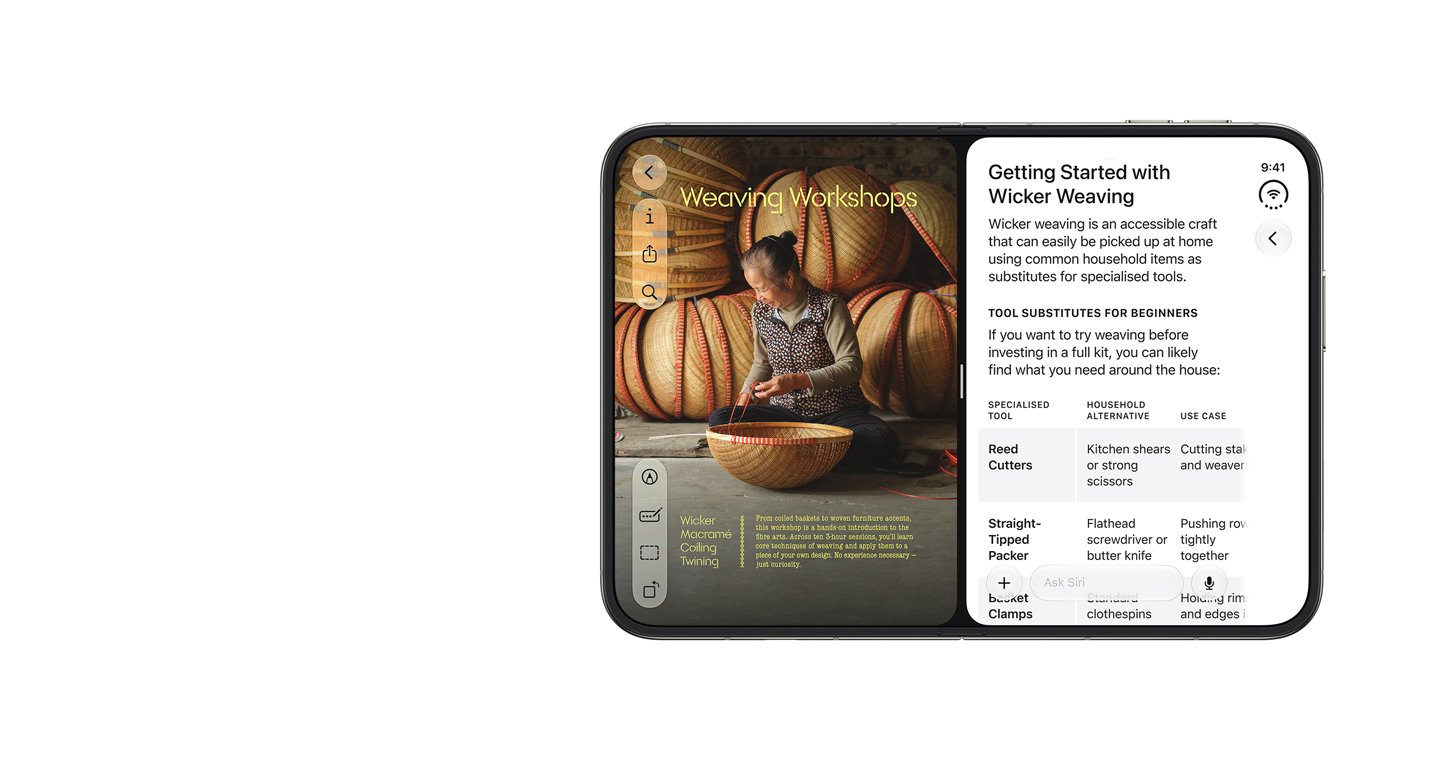 iPhone Duo iOS 27 split-screen multitasking in landscape mode
The 7.6-inch display supports true side-by-side app pairing:
text┌───────────────────────┬───────────────────────┐ │ │ │ │ Safari │ Notes │ │ │ │ │ │ │ └───────────────────────┴───────────────────────┘
Apps can drag and drop images, links, and documents across windows without switching contexts.
The Duo includes Apple's custom connectivity platform:
Apple's second-generation in-house cellular modem, featuring AI-powered RF beamforming, lower battery draw, and mmWave support.
Integrated support for:
Apple built the Duo with an emphasis on rugged structural integrity:
The iPhone Duo launches in four storage capacities:
Available finishes:
| Feature | iPhone Duo Specification |
|---|---|
| Form factor | Book-style inward folding |
| Inner display | 7.6-inch Super Retina XDR OLED, 1878 × 2670 (430 ppi) |
| Outer display | 5.4-inch Super Retina XDR OLED, 1398 × 2034 (460 ppi) |
| Refresh rate | ProMotion 1Hz–120Hz adaptive |
| Peak brightness | 3,000 nits outdoor peak (both displays) |
| Processor | Apple A20 Pro (2nm, 6-core CPU, 7-core GPU) |
| Neural Engine | Dual 16-core Neural Engine |
| Rear camera | 48MP Fusion (f/1.6, OIS) + 48MP Ultra Wide (120° FOV, Macro) |
| Front cover camera | 12MP Center Stage |
| Inner camera | Under-display FaceTime camera |
| Stylus support | Apple Pencil (USB-C) on inner screen |
| Biometrics | Touch ID side button |
| Thickness | 5.2 mm (open) / 11.3 mm (folded) |
| Weight | 254 grams |
| Chassis | Grade 5 Titanium + 3D-printed titanium hinge cover |
| Water resistance | IP68 (6 metres up to 30 minutes) |
| Connectivity | Apple C2 5G modem, Wi-Fi 7, Bluetooth 6, Thread |
| Battery life | Up to 31 hrs video (inner) / Up to 44 hrs (outer) |
| Operating system | iOS 27 foldable edition |
| India price | Starts at ₹2,99,900 (256GB) to ₹4,49,900 (2TB) |
At ₹2,99,900, the Duo is a halo device combining an ultra-premium smartphone with a compact iPad.
| Dimension | iPhone Duo | Traditional iPhone |
|---|---|---|
| Form factor | Pocketable phone + 7.6" mini tablet | Single rigid glass slab |
| Screen real estate | Dual displays (5.4" + 7.6") | Single display (6.3" or 6.9") |
| Hinge mechanism | Precision 3D-printed titanium hinge | None |
| Multitasking | Side-by-side split view & drag-drop | Single app with picture-in-picture |
| Apple Pencil | Supported (USB-C) | Not supported |
| Biometrics | Touch ID on power button | Face ID TrueDepth camera |
| Weight | 254 g | 199 g – 227 g |
| Open thickness | 5.2 mm | 8.25 mm |
| Starting India price | ₹2,99,900 | ₹1,19,900 – ₹1,34,900 |
The Duo represents the convergence of eight distinct hardware and software technologies:
The iPhone Duo represents Apple's most radical hardware evolution in years.
By integrating a 10-layer OLED stack, a 3D-printed titanium hinge, the 2nm A20 Pro, and adaptive split-screen iOS 27 into an ultra-thin 5.2mm profile, Apple has delivered a genuinely differentiated hybrid product.
While the Indian entry price of ₹2,99,900 firmly cements it as an elite luxury device, users who rely on high-performance mobile multitasking and tablet-scale workflows will find the Duo to be a transformative addition to Apple's lineup.
We help founders, brands, and local businesses turn modern tech into measurable revenue and standout brand identity.