
Loading Studio Assets...

OpenAI has officially launched GPT-Live, a complete overhaul of its real-time conversational capabilities.
By replacing the previous Advanced Voice Mode (AVM), GPT-Live introduces two new native voice models: gpt-live-1 (for Plus/Pro subscribers) and gpt-live-1-mini (for free users).
This isn’t just a simple software skin. GPT-Live represents a fundamental architectural shift: full-duplex, simultaneous listening and speaking combined with background cognitive delegation.
Here is a complete breakdown of what full-duplex voice actually changes, how the background routing works, and how the new models stack up against the old AVM on hard benchmarks.
If you have used AVM or older voice assistants, you know the interaction is strictly turn-based. You speak, wait for the processing circle to spin, the model answers, and then you speak again. If you speak while the model is talking, it experiences a jarring pause or misses your input entirely.
GPT-Live changes this by keeping the audio pipe open in both directions simultaneously (full-duplex):
This makes voice interactions feel less like querying a database and more like a fluid phone call with a human.
Historically, voice models had to choose between being fast (for low-latency conversation) or being smart (for complex reasoning). You couldn’t have both because running a massive reasoning model on real-time audio streams introduces seconds of latency, killing the conversational flow.
GPT-Live solves this via Background Delegation:
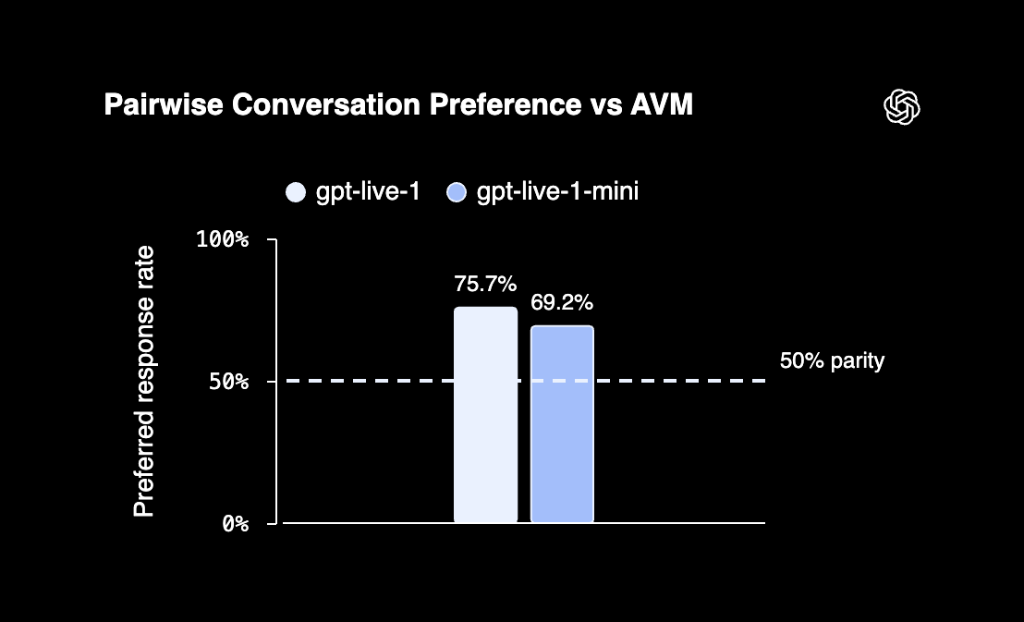
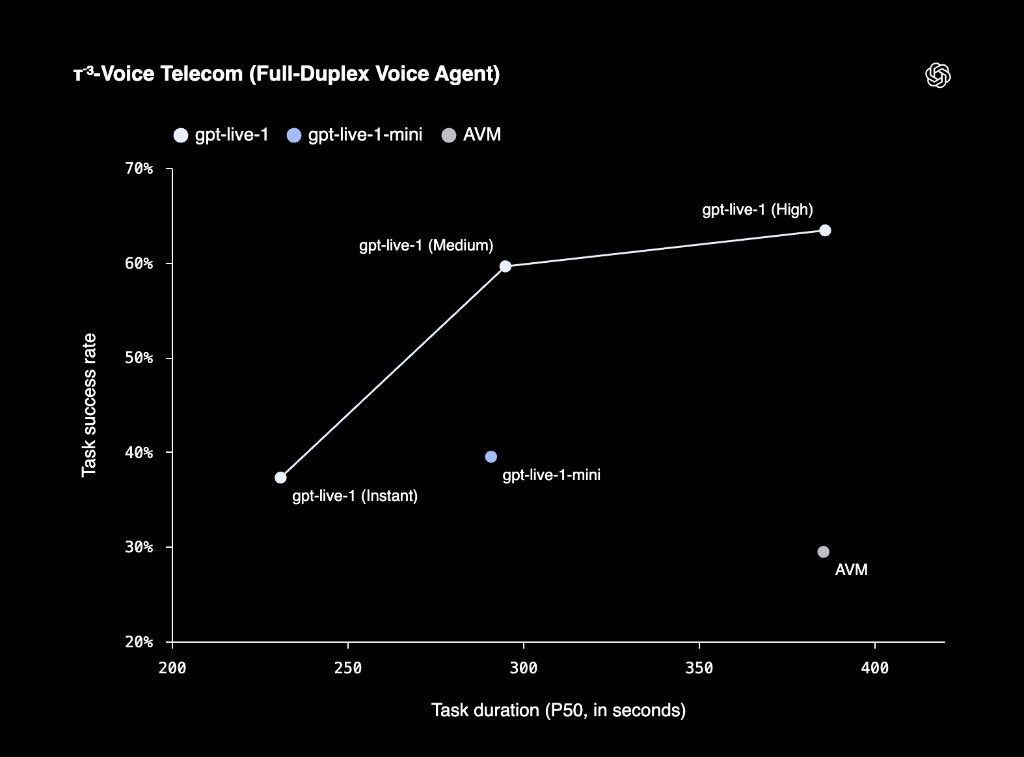
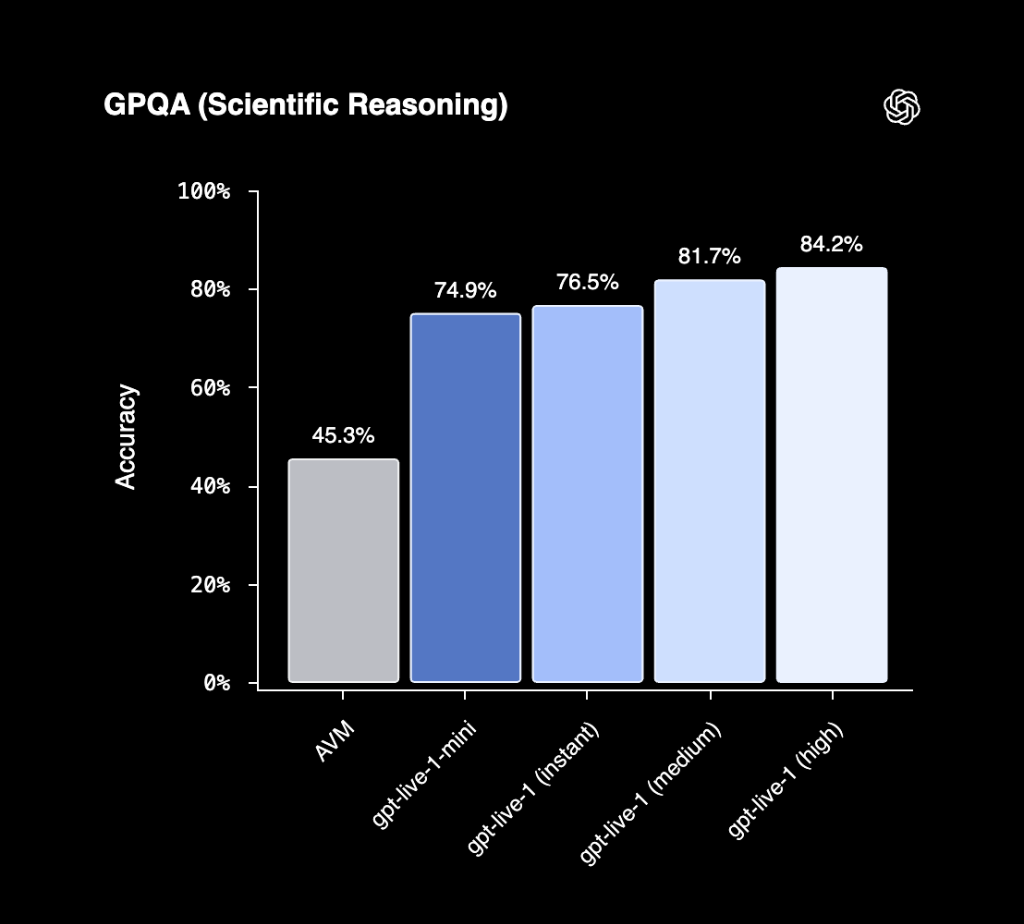
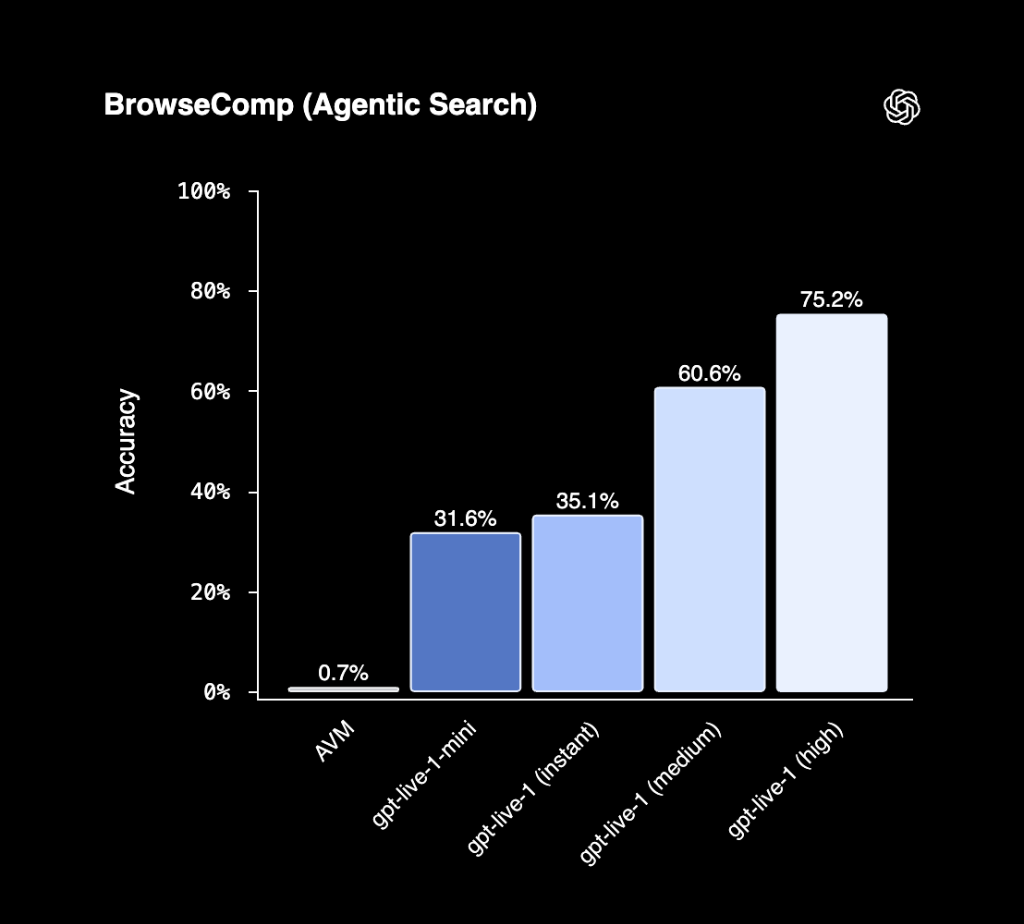
OpenAI provided performance evaluations comparing the new gpt-live-1 series against the legacy Advanced Voice Mode (AVM) across several key dimensions.
When evaluated by human judges on natural flow, conversational pacing, and voice quality, the new models dominate:
T³-Voice Telecom simulates realistic, full-duplex voice agent tasks (like resolving customer support disputes or navigating phone menus). The benchmark maps success rate against completion speed:
On the highly difficult GPQA scientific graduate-level reasoning benchmark, the delegation model shows its strength:
BrowseComp tests the model's ability to navigate websites, click links, and extract information in real-time to answer a voice query:
GPT-Live is rolling out globally on iOS, Android, and web. As of now, it is a ChatGPT-only feature for Go, Plus, and Pro accounts, with free users receiving gpt-live-1-mini.
For enterprise developers, OpenAI has stated they plan to bring the live duplex capabilities to the API soon, creating massive opportunities for real-time customer support, interactive language tutors, and voice-activated control systems.
Build voice-first AI agents for your business. Brandomize helps businesses design and implement real-time voice workflows, integrate API voice endpoints, and build next-generation customer service agents that speak and think like humans. Connect with us to upgrade your communications today.
We help founders, brands, and local businesses turn modern tech into measurable revenue and standout brand identity.
Viral rumors of an unannounced Gemini 3.8 release flooded the internet on August 21-22. Here is the verified truth on Google's model cadence, the 3.5 Pro testing status, and the multi-billion Marvell custom silicon partnership.
On August 21, OpenAI rolled out a surprise 20%+ price reduction on its flagship GPT-5.6 Sol model across API and Codex credits. Discover how this aggressive move reshapes AI development costs.