
Loading Studio Assets...
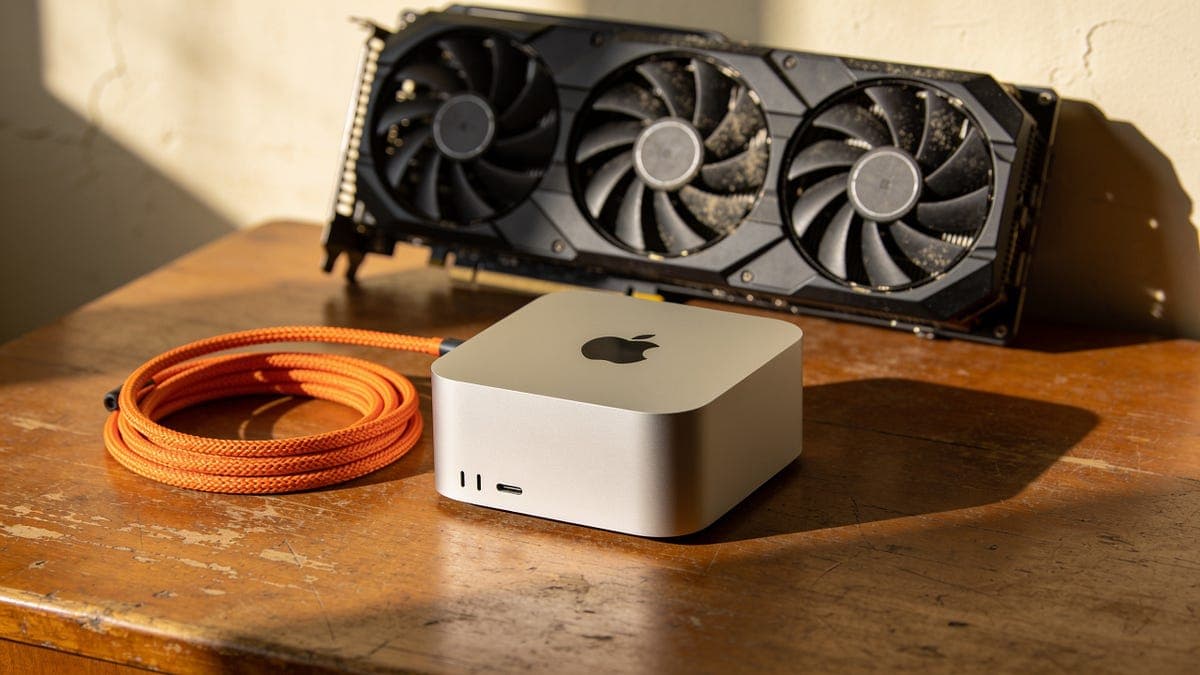
In one of the most unusual hardware infrastructure expansions in artificial intelligence history, reports confirmed on August 31, 2026 that OpenAI has purchased "tens of thousands" of Apple Mac mini and Mac Studio desktop computers.
Rather than relying solely on traditional liquid-cooled server racks filled with NVIDIA H100 or Blackwell GPUs, OpenAI is deploying vast clusters of Apple Silicon computers to build a specialized infrastructure dedicated to reinforcement learning (RL) and training "computer-use" AI agents.
Training foundation models to write text or generate images requires raw FLOPS provided by GPU clusters. However, training autonomous computer-use agents (like OpenAI Operator or Anthropic Computer Use) requires a completely different compute environment:
mermaidgraph TD A[Traditional LLM Training] --> B[Massive NVIDIA GPU Clusters] A --> C[Processes Raw Text / Token Matrices] D[Computer-Use Agent RL Training] --> E[Tens of Thousands of Isolated OS Environments] D --> F[Simulates Mouse Clicks, Keyboard Inputs, Screen Rendering & GUI Workflows] E & F --> G[Apple Silicon Mac Mini / Studio Clusters]
OpenAI chose Apple Mac mini and Mac Studio systems over standard x86 servers due to key architectural advantages built into Apple's M-series chips:
| Architecture Metric | Standard x86 Server + Discrete GPU | Apple Silicon (Mac Mini / Studio UMA) |
|---|---|---|
| Memory Architecture | Split CPU RAM (DDR5) + GPU VRAM (GDDR/HBM) | Unified Memory Architecture (Shared CPU/GPU/NPU) |
| Memory Bandwidth | PCIe Bottleneck during CPU-GPU Transfers | Direct Ultra-High Bandwidth Access (up to 800 GB/s) |
| Power Efficiency | High Wattage per Node (300W – 700W) | Extreme Efficiency (~30W – 100W per node) |
| Form Factor & Density | Multi-U Rack Servers | Ultra-Compact Stacking in Custom Server Enclosures |
| On-Device AI Acceleration | Requires dedicated GPU invocation | Integrated 16/32-core Neural Engine |
mermaidgraph LR A[Apple Silicon UMA] --> B[Zero PCIe Transfer Overhead] A --> C[CPU & GPU Share 64GB - 192GB Unified Memory] B & C --> D[Ultra-Fast Multi-Modal Vision & Action Loops]
OpenAI’s massive procurement has reportedly triggered temporary stock shortages for M4 and M5-based Mac mini and Mac Studio configurations across commercial channels.
Recognizing this enterprise demand, Apple has begun shipping server-optimized rackmount kits and expanded clustering firmware for its latest M6 chip series, allowing data centers to chain thousands of Mac minis together seamlessly.
Reports also indicate that competitors like Anthropic are deploying similar Mac mini hardware clusters via cloud hosting providers to train Claude computer-use capabilities.
The deployment of desktop hardware clusters marks a turning point in AI infrastructure. As AI transitions from static chatbots into active digital coworkers, hardware architectures designed for real-time operating system interaction are becoming as critical as traditional training supercomputers.
At Brandomize, we build scalable, future-ready digital platforms, web applications, and AI integrations that help innovative businesses automate operations and scale online.
Ready to engineer your next AI-driven breakthrough? Get in touch with the Brandomize engineering team today.
We help founders, brands, and local businesses turn modern tech into measurable revenue and standout brand identity.
As the internet drowns in recursive synthetic sludge, artificial intelligence is eating its own tail—triggering irreversible model collapse and epistemic decay.
OpenAI CFO Sarah Friar argues proprietary models beat open source on total cost of ownership, citing an 80% Luna price cut and useful intelligence per dollar.