
Loading Studio Assets...
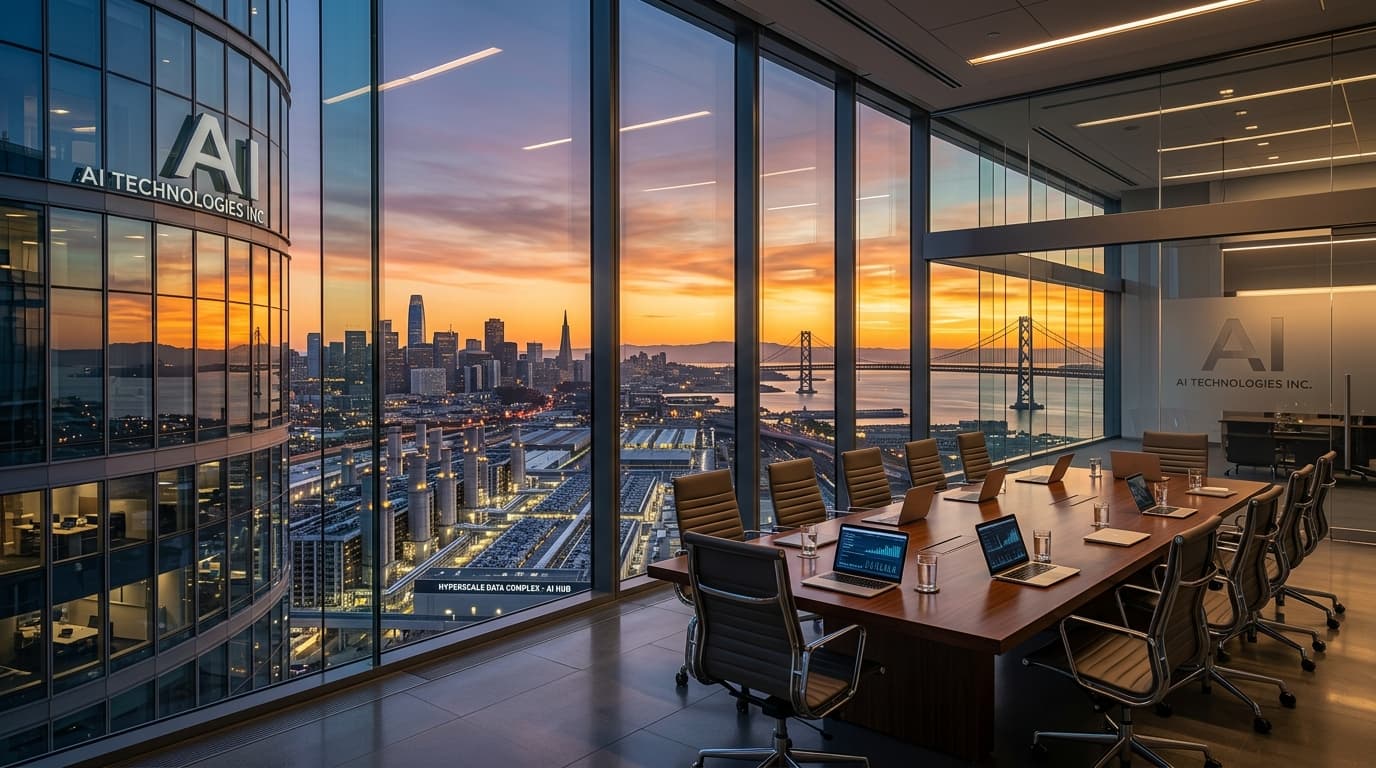
In a rapid sequence of high-profile departures leading up to its planned 2027 Initial Public Offering (IPO), OpenAI has lost another key leader: Chris Malone, Head of Data Centers and Compute Infrastructure.
Malone’s exit marks the fourth senior executive departure in recent months, following the departures of longtime Chief Operating Officer Brad Lightcap, CEO of Applications Fidji Simo, and Chief Revenue Officer Denise Dresser.
As OpenAI transitions from its non-profit research origins into a $300B+ commercial powerhouse backed by Amazon, Microsoft, and SoftBank, the leadership churn highlights the immense operational strain of scaling compute infrastructure, managing global enterprise revenue, and preparing for public market governance.
Here is an analysis of what is driving this executive restructuring, the challenges facing OpenAI’s data center roadmap, and what it signals for the broader AI industry.
The recent wave of executive transitions spans key revenue, operations, and infrastructure divisions:
| Executive | Former Role at OpenAI | Departure Window | Strategic Context |
|---|---|---|---|
| Brad Lightcap | Chief Operating Officer (COO) | August 2026 | Architect of OpenAI’s enterprise commercial deals and Microsoft partnership |
| Fidji Simo | CEO of Applications | July 2026 (Transitioned to Advisor) | Oversaw consumer product scaling and ChatGPT mobile application growth |
| Denise Dresser | Chief Revenue Officer (CRO) | Mid-August 2026 | Former Salesforce executive brought in to accelerate Fortune 500 sales funnels |
| Chris Malone | Head of Data Centers | Late August 2026 | Managed hyperscale server cluster deployment and energy procurement |
This executive turnover follows earlier historic departures in 2024–2025, including co-founders Ilya Sutskever (who launched Safe Superintelligence Inc.), John Schulman (who joined Anthropic), and former CTO Mira Murati.
Chris Malone’s departure comes at an exceptionally delicate moment for OpenAI’s physical infrastructure roadmap:
mermaidgraph TD A[OpenAI Compute Demand 2026-2027] --> B[Training Next-Gen Frontier Models] A --> C[Serving 300M+ Weekly Active Users] A --> D[Powering ChatGPT Work Autonomous Browser Sessions] B & C & D --> E[Massive Energy & Gigawatt Data Center Constraint]
At the heart of OpenAI’s executive restructuring is its ongoing corporate reorganization.
OpenAI was founded in 2015 as a non-profit research lab with a mission to build safe Artificial General Intelligence (AGI) for the benefit of humanity. Today, it is preparing for an IPO that could value the company between $300 billion and $400 billion.
For the millions of businesses and developers building on OpenAI’s APIs, what are the practical takeaways from this leadership reshuffle?
As Big Tech undergoes rapid corporate and infrastructural restructuring, businesses need digital partners who focus on stability, performance, and long-term value.
At Brandomize, we engineer resilient web applications, custom API integrations, and conversion-focused digital platforms designed to weather any platform change.
Ready to build digital infrastructure that scales with your ambitions? Talk to the Brandomize team today.
We help founders, brands, and local businesses turn modern tech into measurable revenue and standout brand identity.
Chinese AI giant Moonshot AI has reached a $35 billion valuation and is targeting $50B in a pre-IPO round, with annual recurring revenue surging past $300 million. In a historic geopolitical breakthrough, Moonshot is in early negotiations with Microsoft, Amazon, and Google for a 30% revenue-sharing model to host its Kimi K3 model.
Amazon has completed the largest single corporate investment in AI history — $50 billion for a 5% stake in OpenAI, with AWS becoming the exclusive cloud distribution partner for OpenAI Frontier. We break down the strategic logic, the implications for Google and Microsoft, and what this means for every business using AI tools.