
Loading Studio Assets...
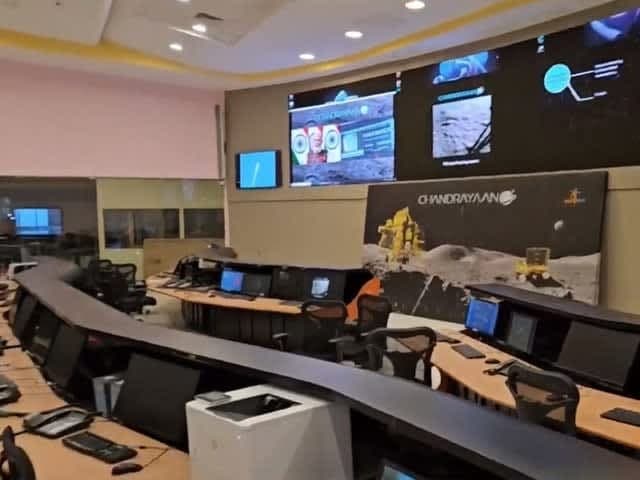
In a milestone that underscores India's meticulous preparation for human spaceflight, the Indian Space Research Organisation (ISRO) has formally operationalized dual mission control centres for the Gaganyaan programme, split strategically between Bengaluru and Sriharikota.
Designed to ensure absolute fault tolerance and 100% operational redundancy during high-stakes orbital operations, this dual-control architecture guarantees that mission controllers will maintain unbroken command authority over the crew module across all mission phases.
Human spaceflight introduces safety mandates far beyond those required for uncrewed scientific satellites or lunar probes. In the event of network disruption, localized power failure, or extreme meteorological events, command capability must transition seamlessly across geographic regions without dropping a millisecond of telemetry.
mermaidgraph TD A[Gaganyaan Orbital Crew Module] --> B[Deep Space & Ground Telemetry Stations] B --> C{Encrypted Dedicated Fiber Backbone} C --> D[Bengaluru MOX: Primary Mission Operations] C --> E[Sriharikota SDSC-SHAR: Hot-Standby Control Centre] D --> F[Flight Dynamics & Life Support Monitoring] D --> G[CAPCOM Radio Console] E --> H[Real-Time State Synchronization] E --> I[Instantaneous Failover Control] G --> J[Direct Voice Link to Astronauts] C --> K[ESOC Darmstadt & International Ground Stations]
ISRO's architecture assigns specific operational duties across both facilities while maintaining hot-standby mirror capabilities:
| Operational Dimension | Bengaluru Mission Operations Complex (MOX - ISTRAC) | Sriharikota Control Facility (SDSC-SHAR) |
|---|---|---|
| Primary Responsibility | Orbital phase navigation, life-support telemetry, entry guidance | Pre-launch countdown, liftoff dynamics, initial ascent monitoring |
| Failover Role | Ascent backup | Hot-standby orbital mission control if Bengaluru link is disrupted |
| Astronaut Communication | Primary CAPCOM console and biomedical station | Secondary tactical comms and launchpad abort coordinator |
| Data Interconnect | Multi-gigabit redundant fiber links + dedicated GSAT satellite transponders | Low-latency links to launchpad umbilical sensors and marine recovery units |
| International Interface | Direct link to ESA European Space Operations Centre (ESOC) in Germany | Coastal radar, naval tracking vessels, and Indian Coast Guard air coordination |
A crucial standard introduced alongside the dual control centres is ISRO's formalization of the CAPCOM (Capsule Communicator) protocol.
Under the CAPCOM doctrine, only a single designated voice communicates directly over space-to-ground radio frequencies with the astronaut crew. While dozens of flight controllers, propulsion specialists, thermal engineers, and flight surgeons monitor live telemetry consoles, all questions, warnings, and procedure confirmations are routed through the CAPCOM.
Key safeguards built into the Gaganyaan CAPCOM system:
The operational validation of both control facilities comes at a pivotal juncture in ISRO's mission schedule:
By commissioning dual, geographically dispersed mission operations centres, ISRO joins an elite tier of space agencies—alongside NASA and Roscosmos—capable of sustaining continuous, real-time command of human beings in orbit.
This infrastructure establishes a permanent foundation not only for Gaganyaan, but also for India's upcoming Bharatiya Antariksh Station (BAS) planned for 2035 and future crewed lunar expeditions.
At Brandomize, we draw inspiration from the relentless reliability and failover engineering that defines modern aerospace. We design, develop, and scale fault-tolerant web applications, resilient cloud architectures, and digital experiences that perform without compromise.
Looking to build ultra-reliable systems or elevate your brand's digital presence? Reach out to the Brandomize technology consulting team today.
We help founders, brands, and local businesses turn modern tech into measurable revenue and standout brand identity.